Epoxy Flooring in Plainfield, IL, Built on a Ground and Tested Slab

Garage, basement and commercial floor coatings quoted per square foot, with the product, system build and finished thickness written into every proposal.

Plainfield Epoxy Flooring has spent 20+ years putting epoxy flooring down in Plainfield, IL, from epoxy garage floors and polyaspartic floor coatings to basement floor epoxy, metallic and flake epoxy floors, polished concrete floors and commercial epoxy flooring for shops, kitchens and warehouses. Every one of those jobs starts with the slab rather than the color chart: we grind it open with diamond tooling or a shot blaster, test it for moisture, and read its cracks before any resin is mixed.

That order matters because almost every floor coating failure in a garage or basement traces back to the concrete underneath, not to the product on top. A proposal from us names the product, the system build and the finished thickness, so the floor that goes down can be checked against the floor that was quoted, and the warranty exclusions are read out before anything is signed.

Plainfield sits across two counties, with most of the village in Will County and a smaller piece in Kendall County, and that split decides which health department reviews a restaurant floor and which rules apply to a commercial job. Our residential work covers the young subdivision garages that make up most of the village, the basements along the DuPage River, and the townhome garages in between, while our commercial crews work the warehouse and retail corridors along Route 59, Route 30 and 143rd Street.

Get Your Free Quote

Fast response • No obligation

So we can reach you about your request.

So we can send you a confirmation after you submit this inquiry form.

  • 20+ Years of Floor Coating Work
  • Moisture Testing in Every Scope
  • Free Written Estimates

What we do

Our Services

Epoxy flooring and concrete coatings for Plainfield, IL homes and businesses

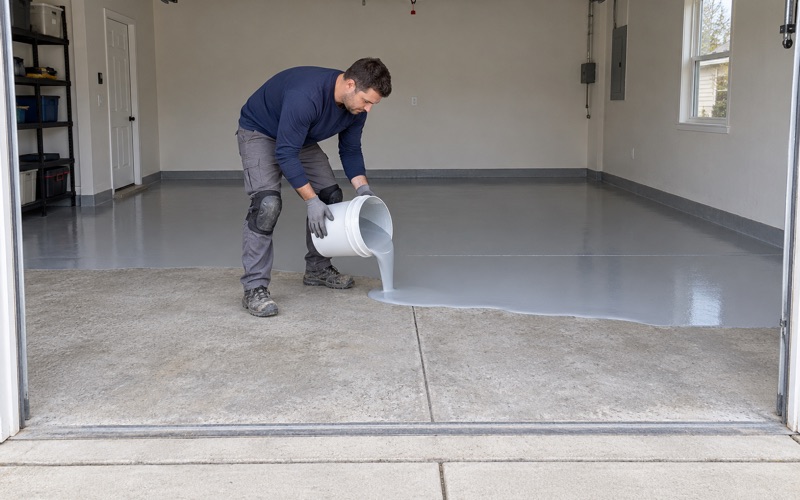
Mixed epoxy being poured in a ribbon onto a ground garage slab at a Plainfield house, ready to be spread.

Epoxy Garage Floor

Ground, moisture tested and built for road salt: epoxy garage floor systems for Plainfield homes, from solid color to full flake.

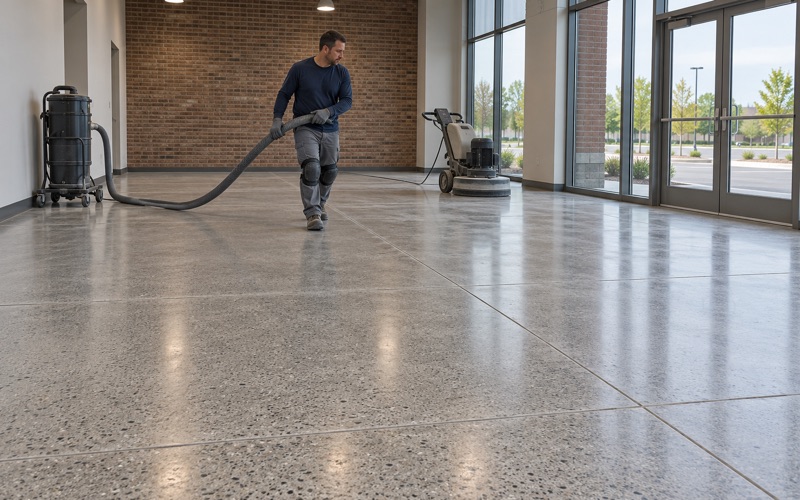
A polished concrete floor in a new Plainfield commercial lobby, the dust extractor hose being pulled clear of the finished area.

Polished Concrete Floors

Polished concrete floors for Plainfield stores, warehouses and basements: the slab itself, ground, densified and honed to the look you choose.

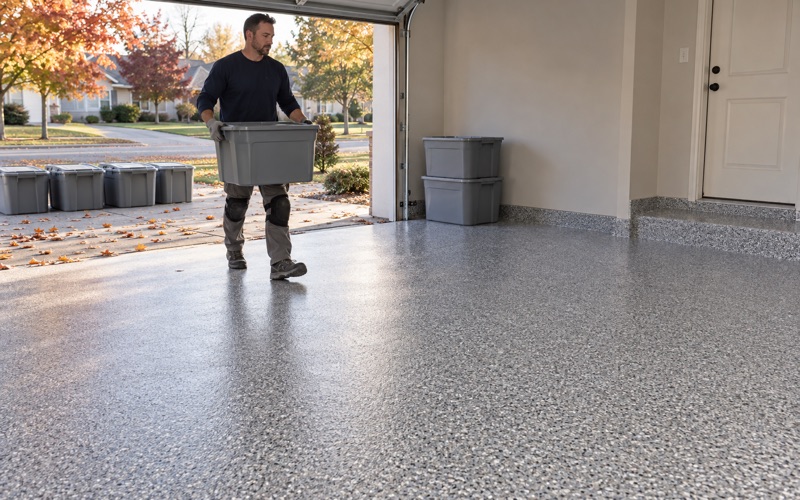
Storage totes carried back into a Plainfield garage the same day its polyaspartic floor was coated.

Polyaspartic Floor Coating

Fast-curing, UV-stable polyaspartic floor coatings for Plainfield garages, shops and commercial floors, installed over a ground and tested slab.

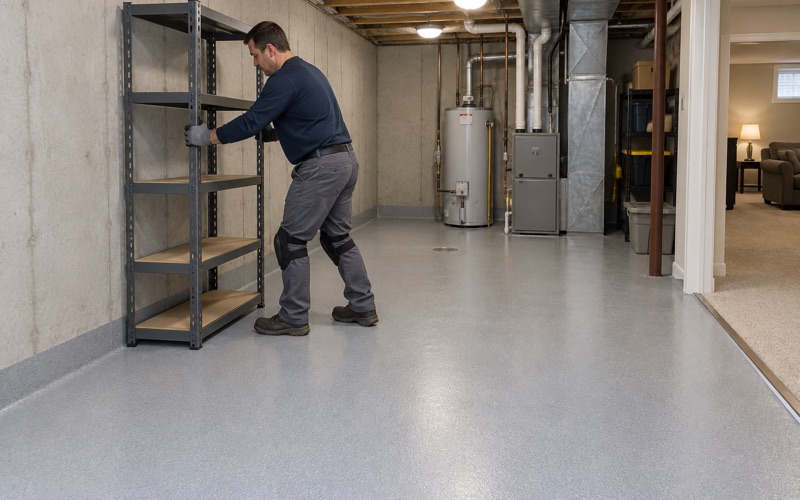
A steel shelving unit slid back against the wall on a new coated basement floor in a Plainfield house.

Basement Floor Epoxy

Basement floor epoxy for Plainfield homes, built on a moisture-tested slab with sumps, drains and the DuPage River history in mind.

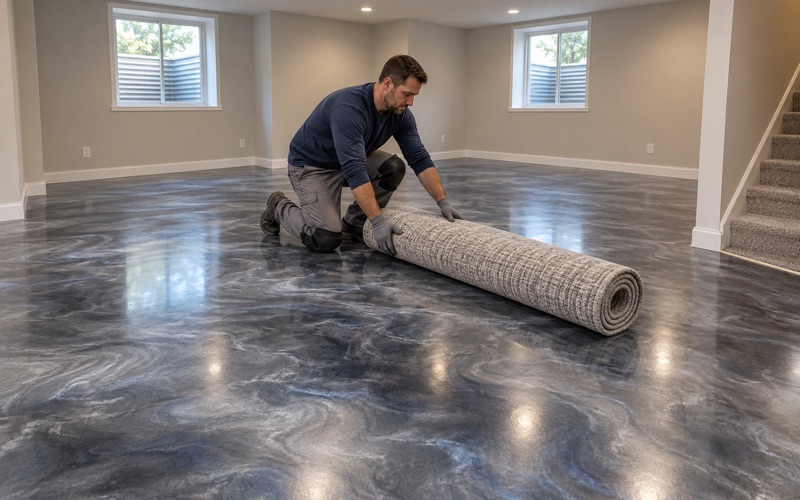
A rolled rug set down on a cured metallic epoxy floor in a Plainfield lower-level family room.

Metallic Epoxy Floor

Marbled, hand-worked metallic epoxy floors for Plainfield basements, garages, showrooms and offices, sealed under a UV-stable topcoat.

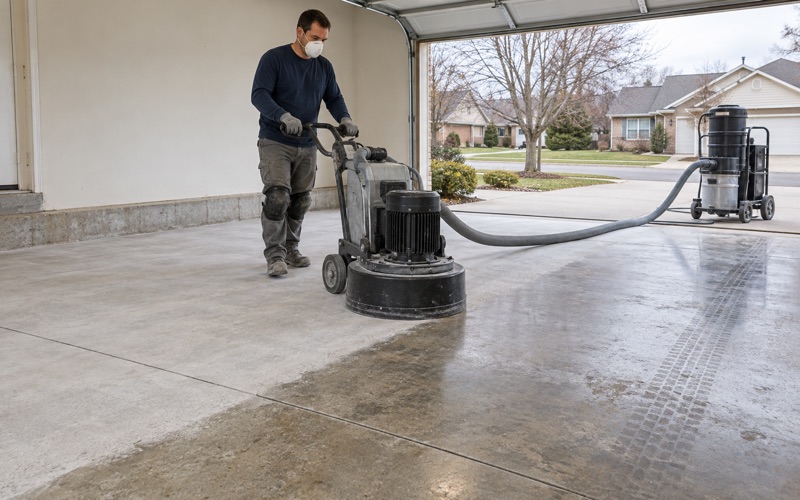
A walk-behind diamond grinder opening an old sealed garage slab in Plainfield, the dust drawn off at the machine.

Concrete Grinding

Diamond grinding and shot blasting for Plainfield slabs: coating, glue and sealer removal, flattening and surface profile before a new floor.

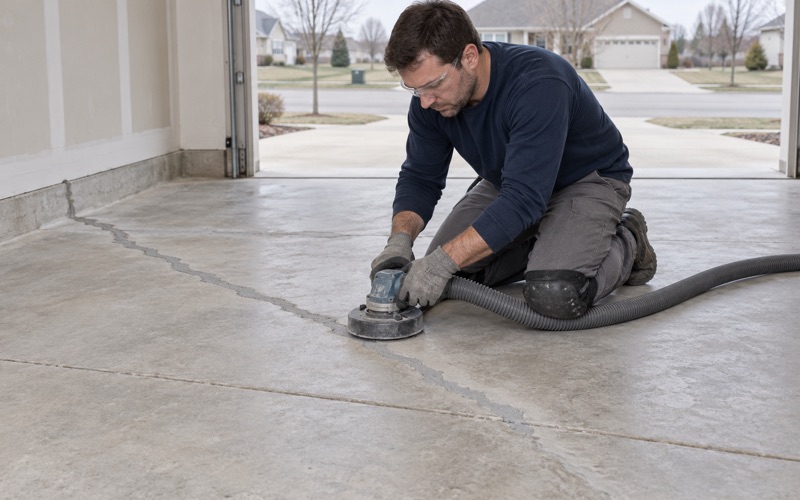
A filled crack ground flush with a hand grinder on a Plainfield garage slab before the floor is coated.

Concrete Floor Repair

Crack, spall, joint and salt-damage repair for Plainfield concrete floors, done before a coating or as a stand-alone fix.

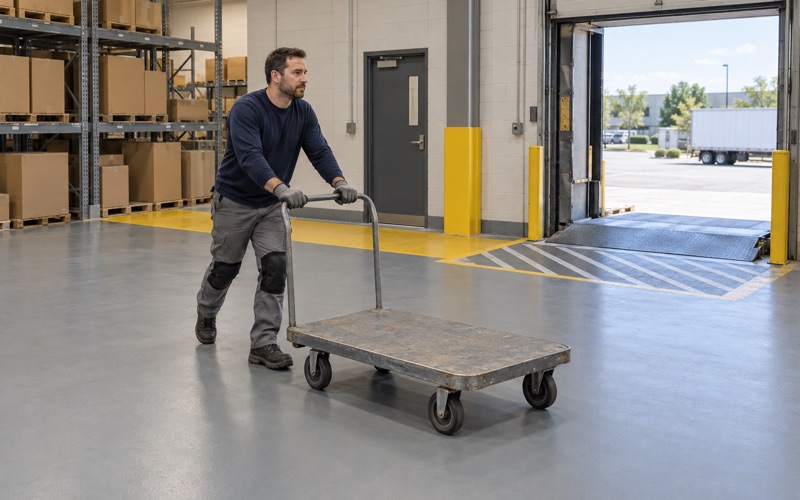
A coated receiving room floor with a marked walkway behind a Plainfield retail store, a flatbed cart rolling across it.

Commercial Epoxy Flooring

Commercial epoxy flooring for Plainfield plants, shops, retail and offices, built to the specification and installed around operating hours.

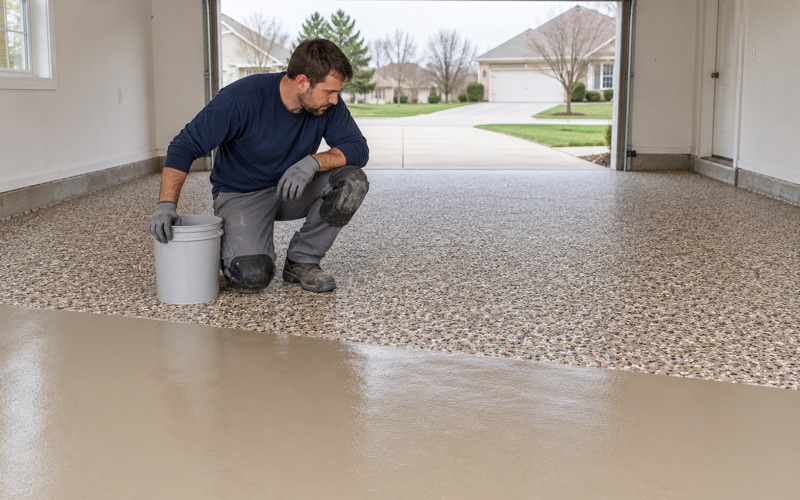
A full-broadcast flake floor settling in a Plainfield garage, a crew member crouched at the working edge.

Flake Epoxy Floor

Vinyl flake epoxy floors for Plainfield garages, basements and shops, in full or partial broadcast with a durable clear topcoat.

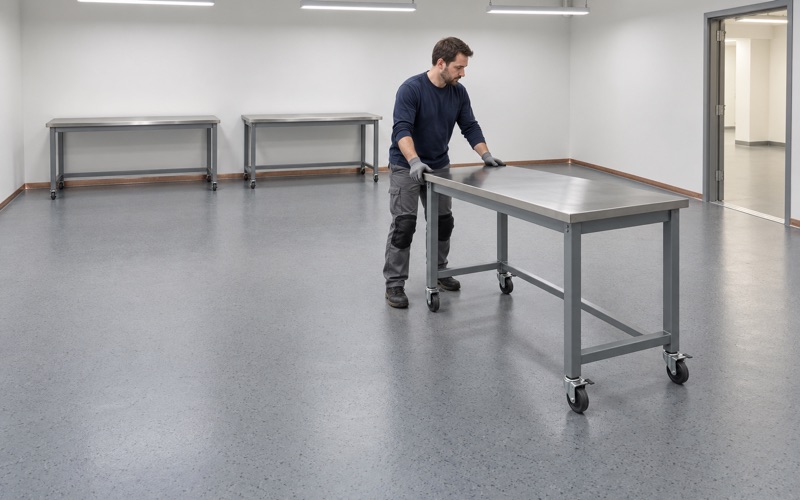
A steel workbench rolled into place on a new static-control floor in a Plainfield electronics assembly room.

Esd Flooring

Static-dissipative and conductive ESD flooring for Plainfield electronics, lab and equipment rooms, grounded and tested after install.

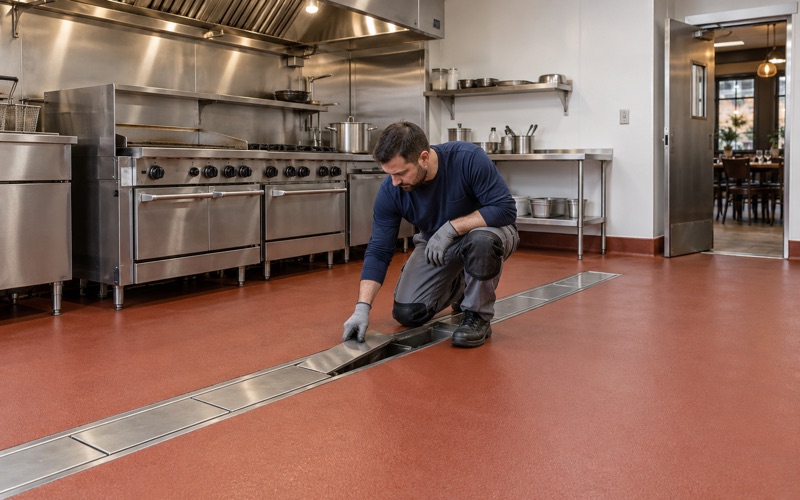
A trench drain grate lifted in a new urethane cement kitchen floor coved up the wall in Plainfield.

Commercial Kitchen Flooring

Urethane cement and resin kitchen floors for Plainfield restaurants and food businesses, with coved bases and health department review in mind.

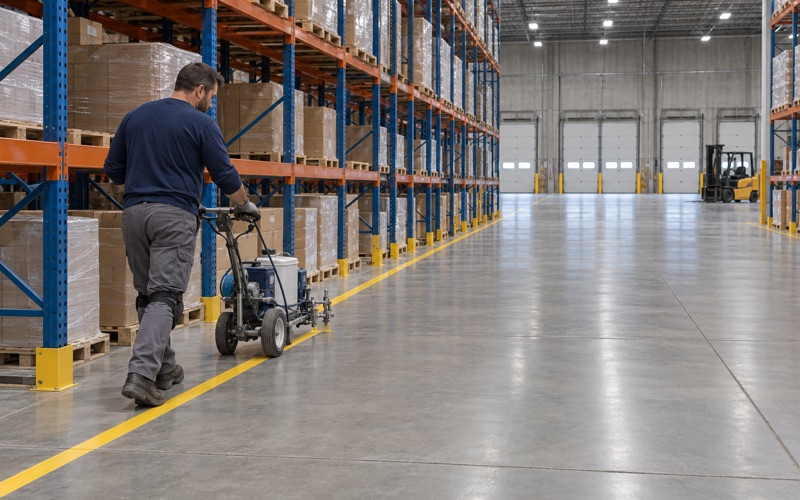
A line striper laying a yellow aisle line on a coated floor in a Plainfield distribution warehouse with racking behind.

Warehouse Floor Coating

Forklift-ready warehouse floor coatings, densifiers, joint filling and striping for Plainfield distribution and storage buildings.

Credentials We Can Put in Writing

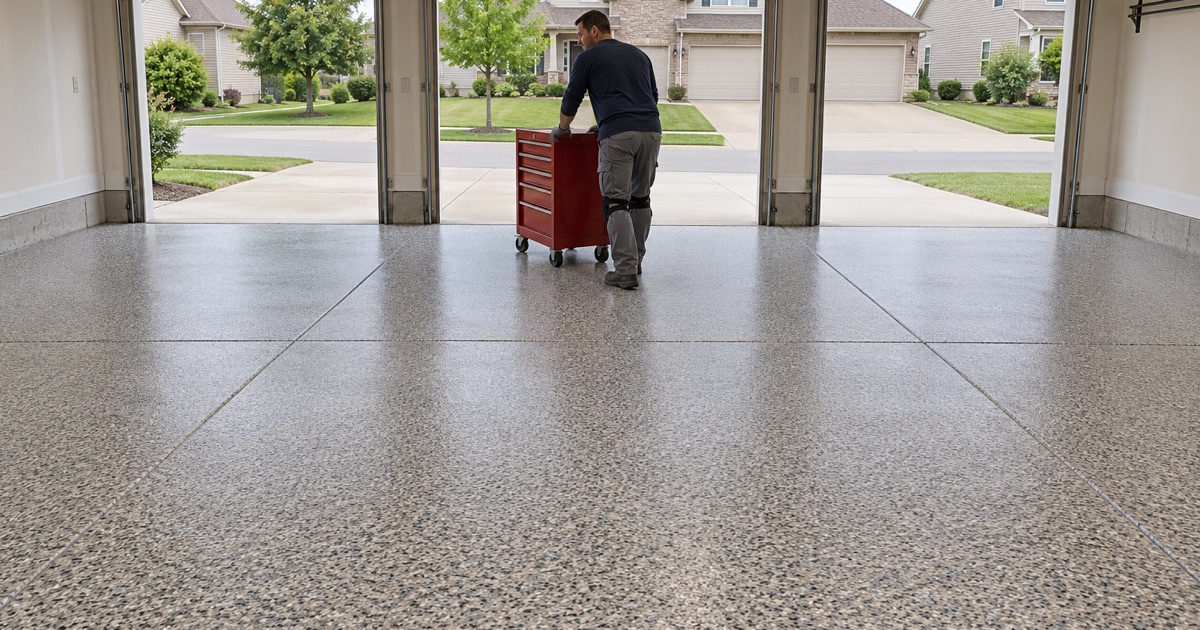
A finished gray, tan and black flake floor in the three-car garage of a Plainfield two-story house, a tool cart being rolled back in.

20+ Years of Epoxy Flooring Work

Plainfield Epoxy Flooring has more than twenty years of floor coating work behind it, across residential garages, basements and commercial floors. That experience shows up in the things that are easy to skip on a quote: the grinding, the moisture test and the honest conversation about a slab that needs repair before it can be coated.

Why Choose Plainfield Epoxy Flooring

Mechanical Slab Prep

Every slab is opened with a diamond grinder or shot blaster to a measured ICRI concrete surface profile before primer touches it, so the epoxy bonds into sound concrete rather than sitting on a sealed, troweled skin. Acid etching is never used, because it leaves residue and an uneven profile that a careful installer would not trust a floor to.

Moisture Tested First

No garage, basement or warehouse slab is coated on an assumption. Moisture testing is written into the scope, and Plainfield’s own garage slab specification lists no vapor barrier under the garage, so we measure what is coming up through the concrete rather than finding out after the floor has blistered.

A Proposal You Can Check

Each proposal names the product line, the coats in the system build and the finished thickness, so a homeowner or facility manager can hold the finished floor up against the quote. That is the difference between a specification and a promise of a premium floor that nobody can measure afterward.

Salt and Brine Ready

Garage floors here are built for the calcium chloride brine and rock salt a Will County winter brings in on the tires, with a broadcast and topcoat chosen to take that chemistry for years. A thin roll-on paint softens and lifts under the same slush that a properly built system simply wipes clean.

Village Rules Confirmed

Illinois issues no state license for flooring work, so before a job is scheduled we confirm the village’s own contractor registration, bond and insurance rules, starting with Plainfield’s annual registration for every contractor before permits. Every home job also gets the written contract and consumer-rights pamphlet the Illinois Home Repair and Remodeling Act requires.

The Garage Floor, Start to Finish

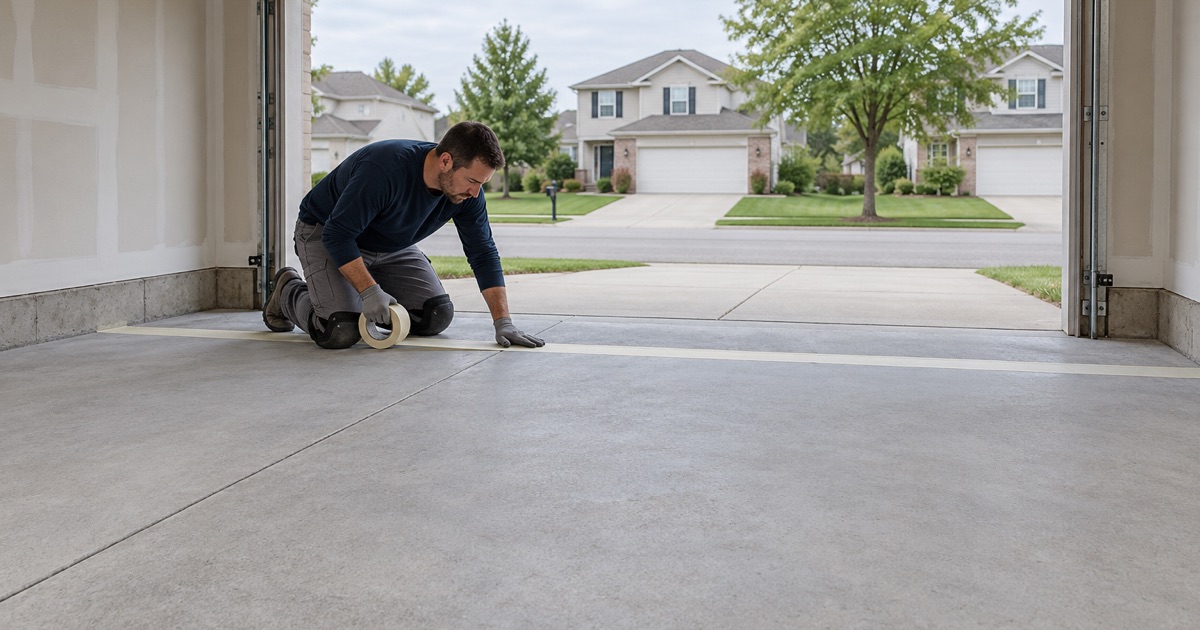
A crew member taping a straight stop line across the threshold of a Plainfield garage before the coating goes down.

What an Epoxy Garage Floor Job Involves

An epoxy garage floor job runs from a walk-through of the slab, through grinding, crack and joint repair, primer, body coat, broadcast and topcoat, to a cure period before the car comes back. We lay out each of those steps in the proposal so you know what happens on which day and when the garage is yours again.

Diamond Grinding Before Any Coating

New concrete leaves a dense troweled surface, and older garages often carry a sealer, paint or a failed roll-on coating that a new layer cannot bond through. We grind the slab open to bare, porous concrete, because a coating laid over sealed or painted concrete is only as strong as whatever it is sitting on, and that layer is usually what lets go.

Moisture Testing a Plainfield Garage Slab

Plainfield’s residential code amendment calls for a garage slab at least four inches thick with welded wire fabric, sloped toward the overhead door, and it names a 6-mil vapor barrier for basement slabs but not for garages. We test the garage slab with a calcium chloride test under ASTM F1869 or in-situ relative humidity probes under ASTM F2170, because a garage built to that text may have nothing under it stopping moisture.

Reading Garage Floor Cracks

Hairline shrinkage cracks, settled sections and cracks with one side higher than the other mean very different things. We map them before quoting, fill stable cracks with a repair material suited to the coating system, and say plainly when a slab has moved enough that replacing a section is the honest answer before any epoxy goes on.

1990s and 2000s Subdivision Garages

Most Plainfield homes were built in 1990 or later, and more than half of all housing units date from 2000 to 2009, so the typical garage slab here is fifteen to thirty-five years old. Two decades of salt, tire traffic and freeze cycles leave scaling, pitted surfaces and worn control joints that our prep and repair steps are planned around.

Calcium Chloride Brine and Rock Salt on Concrete

The brine and rock salt that keep roads open in winter ride into the garage on every tire and soak into bare concrete. Calcium chloride can react with the paste in concrete and break the surface down over time, which is why a sealed, chemical-resistant coating with a cleanable topcoat protects the slab rather than just decorating it.

Winter Garage Floor Coating Timing

Resin cures on slab temperature and on the spread between the slab surface and the dew point, not on the date. A heated, insulated garage can often be coated in midwinter, while an unheated garage during a cold stretch usually has to wait until spring, and we tell you that up front rather than coating a slab that will not cure.

Hot Tire Pickup Resistance

A warm tire coming off the road softens a thin, low-solids coating and can pull it straight off the slab when it cools and grips. A ground slab, a 100% solids epoxy body coat and a polyaspartic or polyurea topcoat resist that, which is why hot tire pickup is a store-kit problem far more often than a professional one.

Epoxy Garage Floor Kits Versus Installed Systems

A retail epoxy garage floor kit is usually a thin, water-based product applied over an acid etched slab, and that combination accounts for a large share of peeling garage floors. An installed system replaces the etch with mechanical grinding, adds crack repair and a moisture test, and builds film thickness that a single roll-on coat cannot reach.

Epoxy Garage Floor Cost per Square Foot

We price per square foot for the exact system on your slab rather than from a national per-garage figure. The number moves with the condition of the concrete, how much crack and joint repair it needs, whether an old coating has to come off, whether moisture calls for a mitigation primer, and whether the finish is solid color, flake or metallic.

Coating Warranty Exclusions

Most coating warranties exclude moisture first, then slab movement, new cracking, chemical exposure outside the product’s rating and impact damage. We read those exclusions out before the job is sold, so you know which risks the warranty covers and which ones the moisture test and prep are there to prevent.
Basements, Sump Pits and the River

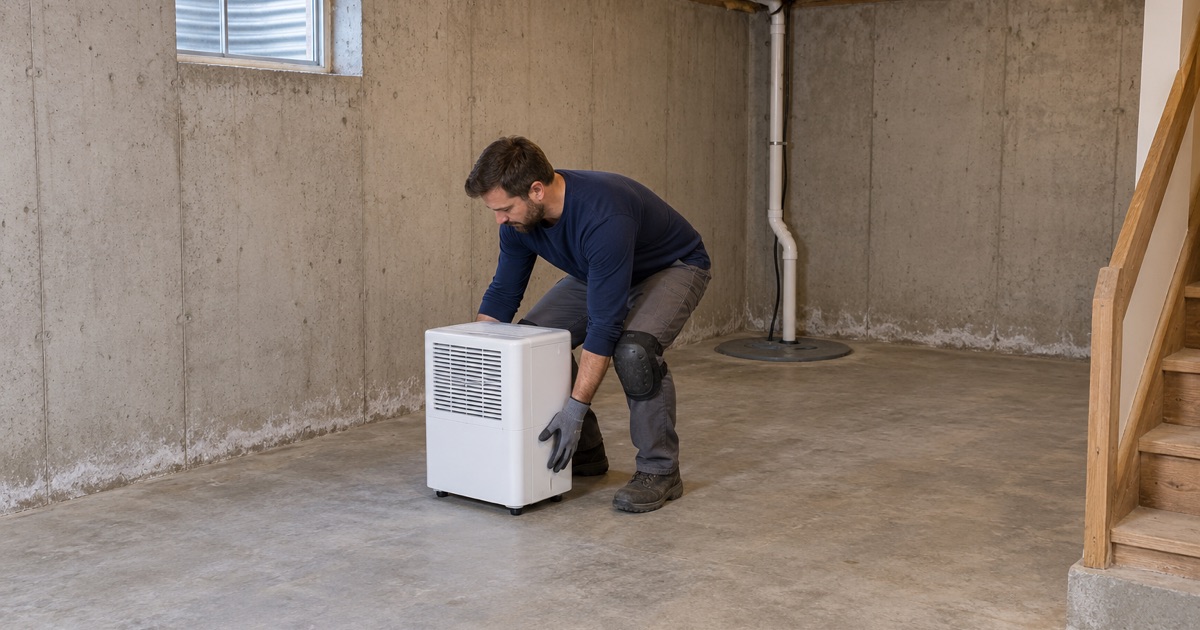
A dehumidifier set down on a bare Plainfield basement slab beside the sump basin, white efflorescence along the wall base.

Basement Floor Epoxy and the Moisture Question

Before a basement floor epoxy is quoted, we need to know whether the slab is dry, damp or actively wet, and where any water is coming from. A basement coating is only worth installing on a slab whose moisture has been measured, so testing comes first and the system is chosen around the result.

Hydrostatic Pressure Under a Basement Slab

When groundwater rises around a foundation, it can push up through the basement slab with real force, and a coating bonded on top becomes the first thing to give. We look at the sump, the drain tile and the history of the room, because no coating holds against water under pressure, and a basement floor coating is not waterproofing.

Efflorescence on a Basement Floor

The white, chalky powder on a basement floor is efflorescence: salts carried up by moisture and left behind as the water evaporates. It is a sign moisture is moving through the slab, so we treat it as something to diagnose and remove during prep, not something a coat of epoxy can hide.

Sump Pits, Footing Drains and Floor Drains

A basement floor coating has to stop cleanly at the sump pit, around floor drains and along perimeter drain tile so water still has somewhere to go. We detail those edges so the coating does not bridge a drain or trap water at the wall, and we never coat over a sump lid or cleanout that needs to stay accessible.

Moisture-Mitigation Primers for Basements

When testing shows the slab is moving more vapor than a standard coating can tolerate, a moisture-mitigation primer goes down first as its own engineered layer. We use the test numbers against the thresholds in ASTM F710 and the product’s own limits to decide whether a basement needs one, rather than adding it to every quote or leaving it off to win the job.

Coating After a DuPage River Flood or Storm

The DuPage River runs through the village, and overbank floods in 1996, 2007, 2008 and 2013 put water into low-lying homes. After a flood or a summer storm, a basement slab can hold moisture long after the surface looks dry, so we test before coating rather than trusting how the floor looks a week later.

FEMA Flood Damage-Resistant Floor Finishes

FEMA Technical Bulletin 2 rates materials by how well they survive flood water and cleanup, and bare or coated concrete is among the most resistant finishes a basement floor can have. For a home near the river, a coated slab that can be hosed down and dried is a more forgiving choice than carpet or laminate over the same concrete.

Laundry Rooms, Workshops and Basement Home Gyms

Basement laundry rooms, workshops and home gyms each put different demands on a coated slab, from detergent spills to dropped tools and rubber mats. We match the system and texture to the room, adding slip resistance near a washer and a tougher topcoat where weights or equipment come down hard.

Basement Floor Coating Cost

A basement floor coating is priced per square foot for the system proposed, and the main variables are moisture, the condition of the slab and how much detailing the room needs. A dry, open slab costs less than a damp one that needs a mitigation primer, crack repair and careful work around a sump and several drains.

Radon and Basement Floor Coatings

A floor coating does not reduce radon, and in Illinois any work that reduces radon in whole or in part requires an IEMA radon mitigation license. We coat around an existing mitigation system and its pipe without disturbing it, and we leave testing and mitigation to the licensed professionals who do that work.

Color, Flake and Finish

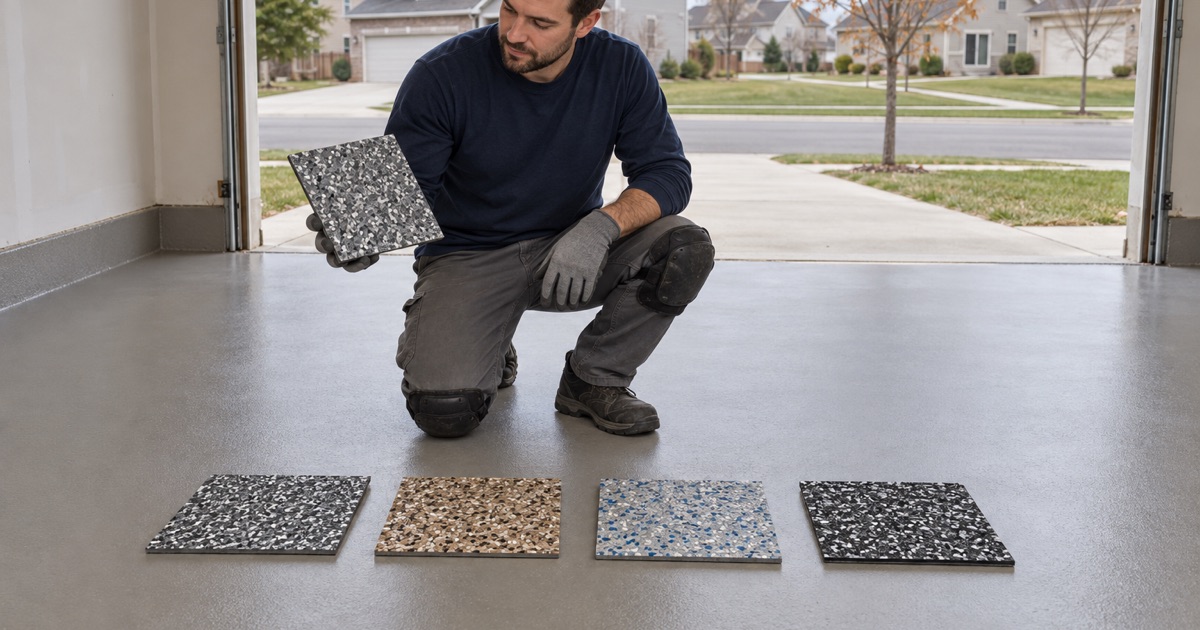
Coated sample boards held beside a cured base coat in a Plainfield garage to choose a flake blend in daylight.

Vinyl Flake Epoxy Floors

A vinyl flake floor is built by broadcasting colored chips into a wet epoxy coat and sealing them under a clear topcoat. Blend and chip size change the look entirely: a full broadcast of small chips reads like speckled granite and hides dust well, while larger chips scattered lightly read bolder and show more of the base color.

Metallic Epoxy Floor Installation

A metallic epoxy floor uses pearlescent pigments moved by hand while the resin is wet, producing a marbled, three-dimensional finish no two floors share. It takes a flat, well-prepared slab and an experienced hand, because every roller mark and footprint during the working window becomes part of the final floor.

Polished Concrete Aggregate Exposure

Polished concrete is the slab itself, ground in stages and hardened with a lithium silicate densifier, rather than a coating applied on top. How deep the grinding goes decides the look, from a cream finish that shows almost no stone to a full aggregate exposure that reads like terrazzo, and we test-grind a patch so you can see what your slab holds.

Gloss, Satin and Matte Floor Coating Finishes

A high gloss topcoat looks deepest when new but shows dust, scratches and tire marks more readily than satin or matte. For a working garage, many owners choose satin, which keeps the color rich and the floor easy to clean while hiding the daily wear that a mirror finish puts on display.

Quartz Aggregate Broadcast Floors

A quartz broadcast floor seeds colored quartz sand into the epoxy, giving color and slip resistance in the same layer. It suits wet entries, locker rooms and commercial spaces that need texture underfoot, and the grit can be tuned so the floor is safe when wet without being rough to clean.

Solid Color Floor Coatings

A solid color coating is the plainest system and sometimes the right one, for a shop floor, a utility room or a commercial area where function matters more than pattern. It still gets the same grinding, repair and moisture test as any decorative floor, because a plain finish fails exactly the same way when the prep is skipped.

Ultraviolet Light and Ambering

Standard epoxy yellows, or ambers, when sunlight reaches it, which shows first in a garage with the door open or a floor near windows. We use an ultraviolet-stable polyaspartic or polyurea topcoat where light reaches the floor, so the color you chose is still the color you see years later.

Saw-Cut Lines, Borders and Inlaid Logos

Saw-cut lines can turn a slab into a grid of tiles or a border, and contrasting colors can outline a workspace or inlay a logo in a showroom. We plan these details around the existing control joints, so the design and the cracks the slab is meant to make in those joints line up.

Warehouses, Kitchens and Shop Floors

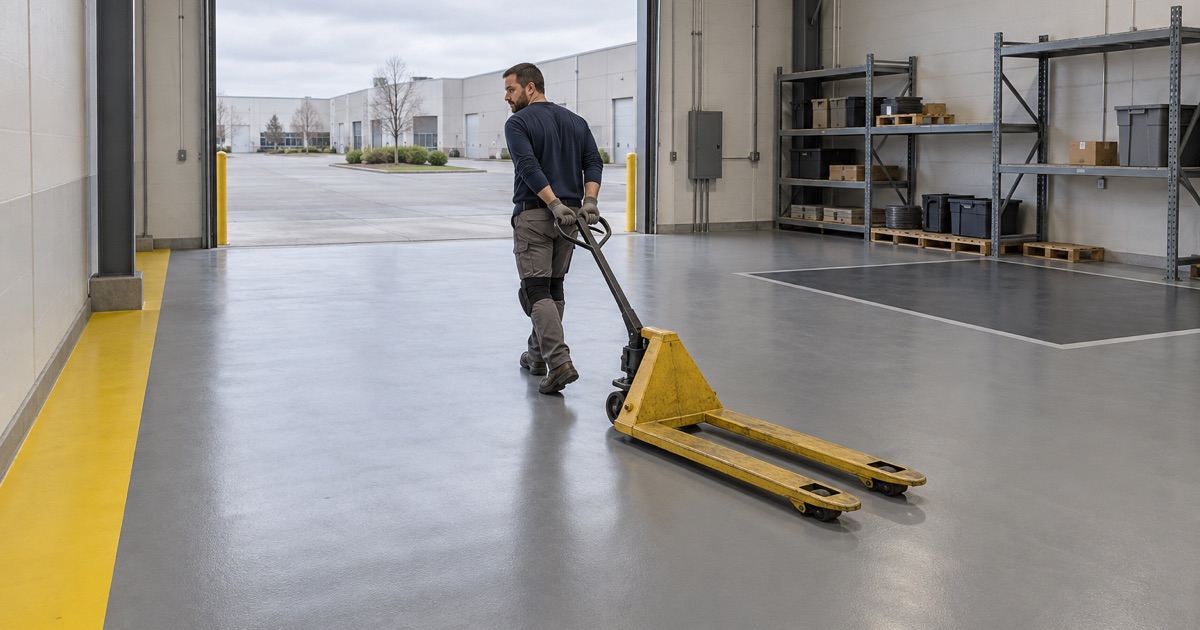
An empty pallet jack pulled across a new coated floor in a Plainfield light-industrial flex bay with a marked walkway.

How Commercial Epoxy Flooring Differs

A commercial floor job is usually specified by the owner, tenant or architect, scheduled around operations and held to traffic, chemical and sanitation demands a home never sees. We build the proposal from the specification, the slab tests and the operating schedule, and we price what the space actually needs rather than a residential system scaled up.

Warehouse Floor Coating Along I-55 and Route 59

The warehouse, distribution and cold-storage buildings along I-55 and Route 59 carry forklift traffic, pallet drag and in cold storage a slab that never warms up. We specify warehouse floor coatings and densifiers for that traffic and temperature, and we test before coating, because a large new slab can still be carrying construction moisture.

Control Joint Filler Under Forklift Traffic

Open control joints chip at the edges under hard forklift wheels and grow into ruts that rattle loads. We fill them with a semi-rigid polyurea joint filler that supports the wheel while still allowing the slab some movement, and we refill joints rather than coating over them when the slab is still shrinking.

Aisle Striping and Safety Marking

Aisle lines, pedestrian walkways, staging boxes and hazard markings are laid into or over the coating so they last as long as the floor. We lay them out with the facility’s own traffic plan, because striping painted onto an uncoated slab wears off in the busiest aisles first.

Restaurant Kitchen Floors and Health Department Review

A restaurant kitchen floor in the Will County part of Plainfield goes through Will County Health Department plan review before the village issues a building permit, and the Kendall County part falls to the Kendall County Health Department. We specify the floor and cove materials for that review so the finish is approved before the work starts, not questioned after.

Urethane Cement and Coved Kitchen Bases

Hot washdown, grease and thermal shock take an ordinary epoxy off a kitchen floor, which is why urethane cement is the usual choice for commercial kitchens. We build integral coved bases where the floor meets the wall, as FDA Food Code 6-201.13 describes for a cleanable juncture, so nothing collects in the corner where mops cannot reach.

Storefront and Tenant Space Floors

Retail and tenant spaces turn over between leases on tight schedules, and the new tenant often needs a floor that looks finished on day one. We coat or polish storefront floors within the turnover window, removing old adhesive and patching where previous fixtures were anchored so the new floor reads clean.

Auto Repair Bay Floor Coatings

Auto repair bays deal with oil, coolant, brake fluid and lifts anchored into the slab. We choose a chemical-resistant system with a textured finish that stays safe when it is wet with fluid, and we detail the coating around lift posts and trench drains instead of stopping short and leaving bare concrete to soak up spills.

Static-Dissipative and ESD Flooring

Electronics assembly, labs and data rooms need floors that bleed static charge away to ground within a set resistance range. We install static-dissipative and ESD flooring with the grounding points the system requires and test the finished floor, because an ESD floor that has not been tested is only a guess.

Illinois VOC Limits on Floor Coatings

Illinois sets volatile organic compound limits for floor coatings and industrial maintenance coatings under 35 Ill. Adm. Code Part 223 Subpart C, and the rule reaches whoever applies the product, not just the manufacturer. We choose compliant floor coatings for every job, which matters more in the Chicago area’s 2015 ozone nonattainment zone.

Overnight and Weekend Floor Work

Shops, stores and kitchens that cannot close for a week get their floor work scheduled around the hours the building has to run, including overnight and weekend windows where the village allows. We stage the work by section and pick fast-cure systems where the turnaround is tight, so the business keeps operating while the new floor goes down.

Areas We Serve

Plainfield Epoxy Flooring provides epoxy-flooring throughout the greater Plainfield area, with the same crews and the same standards on every job.

Good to know

Frequently Asked Questions

How much does an epoxy garage floor cost in Plainfield?

We quote per square foot for the exact system proposed, because a single-coat solid color and a full flake broadcast with a polyaspartic topcoat are different jobs on the same slab. Area installers publish Plainfield garage ranges between roughly $4 and $12 per square foot, and crack repair, coating removal and moisture mitigation are what push a floor toward the top of that span.

How long does a coated garage floor take before I can drive on it?

Most two-car garages are ground, repaired and coated over one to three working days, depending on the system and how much repair the slab needs. Foot traffic usually follows within a day, while vehicles wait longer, and the exact window depends on the product and on slab temperature rather than on a fixed number of hours.

Does Illinois require a license for epoxy flooring contractors?

Illinois issues no state license for flooring or floor coating work, so the rules that apply are set village by village. Plainfield requires every general contractor and subcontractor to register with its Building Department each year before permits, and neighboring villages set their own bond and insurance rules, which we confirm before a job is scheduled.

Do I need a permit to coat my garage floor in Plainfield?

Plainfield deleted the model code's list of permit-exempt work and treats ordinary repairs separately, and the village does not publish a plain answer for floor coating on its own. We ask the Building Department about the specific scope rather than asserting either answer, and a slab replacement or structural repair is a different question from a coating.

Will a floor coating stop water coming into my basement?

No. A coating is a wear and finish layer, not waterproofing, and water pushed up through a slab by hydrostatic pressure will lift it. We start a basement job by finding where the water comes from, test the slab, and say plainly when drainage or a sump issue has to be solved before any coating can last.

What is the difference between epoxy and polyaspartic coatings?

A 100% solids epoxy builds a thick, hard body coat with strong bond to ground concrete, while a polyaspartic cures faster, holds color under ultraviolet light and tolerates a wider temperature range. Many of our garage systems use both: epoxy as the base and broadcast layer, with a polyaspartic or polyurea topcoat over it.

Can you coat a garage in winter?

Sometimes. Curing depends on slab temperature and the spread between the slab surface and the dew point, not on the calendar, so a heated garage can often be coated in January. An unheated garage in a Will County cold snap usually has to wait for spring, and we say so rather than coating a slab that will not cure properly.

What does a floor coating warranty usually exclude?

Moisture is the first exclusion on almost every coating warranty, followed by slab movement, cracking that continues after installation, chemical exposure outside the product's rating and damage from impact. We read the exclusions out before the job is sold, because a warranty is only as useful as what it actually covers.

Is a floor coating a way to reduce radon in my home?

No. In Illinois, reducing radon in whole or in part is work that requires an IEMA radon mitigation license, and we do not hold one or sell a floor coating as radon reduction. A coating can be applied around an existing mitigation system, but testing and mitigation belong to a licensed radon professional.

Ready to Get Started?

Request a free quote today and we'll get back to you fast.