
Plainfield Epoxy Flooring handles concrete floor repair throughout Plainfield, IL, using 20+ years of experience reading slabs, and we repair floors in surrounding cities including Shorewood, Minooka, North Aurora, Warrenville and Lemont. Most of our repair work happens before a coating goes down, but we also fix cracks, spalls and trip edges as stand-alone jobs for homeowners and businesses.
Repair starts with an honest look at why the concrete is damaged. A hairline shrinkage crack, a spalled patch from road salt and a section that has dropped an inch all look like cracked concrete, but they need very different responses, and only some of them can be fixed with filler.
We map cracks, joints and old coatings before quoting, and we say plainly when a slab needs a section replaced before it can be coated. The written proposal lists each repair so you can see what is being fixed and how.
Cracks in Garage and Basement Floors
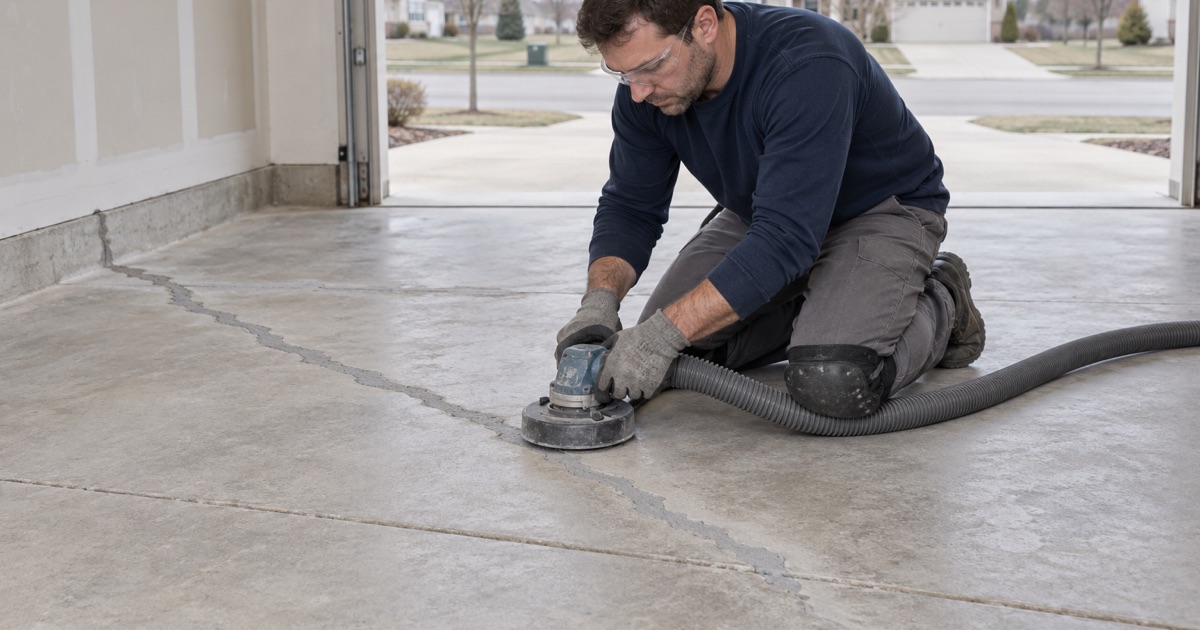
Hairline Shrinkage Cracks
Almost every slab develops fine shrinkage cracks as the concrete dries after placement. These are usually stable and cosmetic, and we open them slightly with a grinder and fill them with a compatible repair material so the coating above stays smooth.
On a young slab, more shrinkage cracks can still appear in the first few years, especially in a new-construction garage. We explain that up front, and where possible we wait until the slab has had time to settle into its cracking pattern before coating it.
Settlement and Displaced Cracks
Cracks where one side sits higher than the other point to movement in the soil or base below. Small lips can be ground flush and filled, but a slab still settling will keep cracking, and we recommend the cause be addressed or the section replaced before coating.
Common causes include poorly compacted fill under the slab, water washing out the base near a downspout, and frost movement at the garage door. A crack monitor or a few months of watching can show whether a crack is still growing before money is spent on a coating over it.
Cracks in Basement Slabs
Basement cracks may let water in from below, especially when groundwater rises. We look for water stains and efflorescence along cracks, test the slab for moisture, and remind homeowners that crack filler and coatings are not waterproofing; drainage and sump issues come first.
Spalls, Scaling and Salt Damage
Salt Scaling Near the Garage Door
Calcium chloride brine and rock salt dripping off vehicles soak into bare concrete, and repeated freeze-thaw cycles break the surface into flakes and pits. Much of this damage concentrates near the garage door and under where cars park, and it is one of the most common repairs we make on older subdivision garages.
We grind out the weak, scaled layer, rebuild the surface with a repair mortar suited to the coating, and finish it flat. A sealed coating afterward keeps brine on the surface instead of letting it soak into the slab again.
Spalled Patches and Pop-Outs
Spalls are areas where the surface has broken away, often from impacts, freeze damage or weak concrete near the top. Pop-outs are small conical holes where an aggregate piece near the surface has expanded and broken loose. Both are cut back to sound concrete and filled before coating.
The repair material matters as much as the patch itself. A fast-setting epoxy or polyurea mortar bonds well under a coating and cures quickly, while a cement-based patch suits deeper repairs and bare floors, so we choose by depth, location and what will sit on top.
Damaged Aprons and Door Thresholds
The edge where a garage slab meets the driveway apron often takes the heaviest salt and impact damage. We repair the inside edge of that transition and finish the coating cleanly at the door line, while full apron replacement is work for a flatwork contractor.
Joints, Edges and Trip Hazards
Control Joint Repair
Control joints are cut into slabs so cracking happens in planned lines. Over time their edges can chip and widen, especially under forklifts or heavy carts. We rebuild broken joint edges and fill joints with a semi-rigid polyurea joint filler in commercial floors where wheels cross them.
In a home garage, control joints are often left visible through the coating or filled flush depending on the finish. A filled joint looks seamless, but if the slab moves the line can reappear, so we talk through which approach suits your floor before work begins.
Grinding Down Trip Edges
Small height differences between slab sections can be ground down to reduce trip hazards in garages, basements and stores. When the difference is large or the slab is still moving, grinding alone is not enough and the section needs repair or replacement.
Edges Around Drains and Equipment
Concrete around floor drains, sump pits and equipment anchors often breaks down first. We repair those edges so the coating can be detailed cleanly around them, keeping drains and sump lids fully working.
When Repair Becomes Replacement
Recognizing a Failing Slab
Widespread heaving, sinking, broken sections and exposed or rusted reinforcement are signs that patching will not hold. In those cases we recommend replacing the affected section before any coating, and we do not quote a decorative floor over concrete that is failing beneath it.
Plainfield Garage Slab Requirements
Plainfield’s residential amendment calls for garage slabs at least four inches thick with welded wire fabric and sloped toward the overhead door. When a section has to be replaced, the new concrete is a separate job for a flatwork contractor working to the village’s requirements, and we coordinate the coating once the new slab has cured and tested dry.
Repair and Warranty Exclusions
Coating warranties typically exclude moisture first, followed by slab movement and new cracking. We explain that repaired cracks can reappear if the slab moves, so you know which risks the repair addresses and which ones remain with the concrete itself.
- 20+ Years of Floor Coating Work
- Moisture Testing in Every Scope
- Free Written Estimates